
Proven Ground Aluminum Retractable Cover Won't Retract? Here's the Fix
A retractable tonneau cover stuck halfway open—or refusing to budge at all—is one of the most frustrating problems a truck owner can face. The good news: most retraction failures on aluminum covers trace back to a handful of fixable causes, not a total system failure.
We've walked thousands of Proven Ground owners through these exact troubleshooting steps. In this guide, we'll show you how to diagnose what's blocking your cover's movement, what to check first, and how to get it sliding smoothly again—often in under twenty minutes with basic tools.
Check the Rail Tracks for Debris First
Nine times out of ten, a stuck retractable cover is riding on contaminated rails. Dirt, leaf fragments, road grit, and dried mud accumulate in the aluminum track channels over time—and even a thin layer creates enough friction to bind the rollers.
Pull the cover as far forward or back as it will go, then inspect both side rails with a flashlight. You’re looking for visible buildup along the inner channel where the slat edges ride. Run your finger along the track; if you feel a gritty texture or see discoloration, debris is present.
Clean both rails end-to-end with a stiff nylon brush and a mild degreaser or soapy water. Avoid solvent-based cleaners that can degrade the UV coating on aluminum. Rinse thoroughly, dry with a microfiber towel, then apply a thin bead of silicone spray lubricant down each rail. Work the cover back and forth a few times to distribute the lube—most jams resolve at this step.
Inspect the Canister Drum and Tensioning Cable
If the rails are clean but the cover still won’t retract smoothly, the issue may be inside the canister housing at the cab end. The spring-loaded drum that winds the slats can lose tension if the internal cable has stretched, kinked, or partially unwound from its anchor.
Open the canister cover—most Proven Ground models use quarter-turn fasteners or hex bolts along the top edge. With the lid off, manually rotate the drum counterclockwise (looking from the driver’s side) to add tension. You should feel steady resistance; if the drum spins freely or clicks without engaging, the tensioning cable has come loose or broken.
Cable Replacement
Replacement cables ship with new end fittings and detailed instructions. The repair typically requires removing the entire canister from the bed rails, unwinding the old cable, threading the new one through the drum arbor, and re-tensioning before reinstalling. Budget about an hour for the full swap if you’re working alone.
Look for Slat Misalignment or a Bent Panel
A single bent or twisted slat can jam the entire cover assembly. This happens most often after a heavy object fell onto the cover while it was partially open, or if someone tried to force it closed against resistance.
With the cover extended, sight down the length of the slats from the tailgate. Each panel should sit flush with its neighbors, forming a continuous surface. A slat that’s canted, raised at one edge, or visibly bowed will snag on the rail or the adjacent panel.
If you spot a bent slat, you can sometimes coax it back into alignment by gently pressing down on the high corner while a second person operates the retraction handle. If the panel is creased or kinked, replacement is the only permanent fix. Individual slat panels are sold separately and slide into the hinge pins from either end—no need to disassemble the entire cover.

Test the Latch Mechanism and Release Handle
The handle that releases the cover from its locked position can stick or fail to disengage fully, leaving the locking pins partially engaged even when you think the cover is free. This creates a hard stop that feels like a jam but is actually the lock doing its job.
Pull the release handle fully and hold it in the open position. Try retracting the cover while keeping tension on the handle. If it now moves freely, the latch wasn’t fully releasing on its own.
Spray a dry PTFE lubricant into the latch housing and work the handle a dozen times to distribute it. If the handle feels spongy or doesn’t return crisply, the internal spring may have weakened. Most latch assemblies mount with two bolts from underneath the canister—replacements install in minutes.

When to Replace vs. Repair
Not every stuck cover needs a full replacement. If cleaning the rails, re-tensioning the drum, and replacing a bent slat solve the problem, you’ve avoided a multi-hundred-dollar part swap.
That said, if you find multiple bent panels, a cracked canister housing, or a drum that won’t hold tension even after a new cable install, replacement may be the smarter move. A cover that’s been forced open repeatedly often develops stress fractures in the hinge points and end caps—issues that resurface even after a repair.
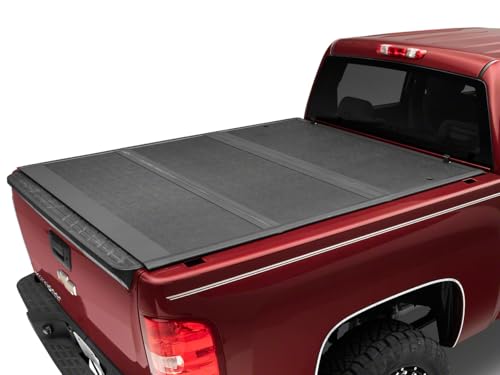
For truck owners comparing cover styles, it’s worth noting that hard folding designs like the Proven Ground EZ Hard Fold and Low Pro Hard Tri-Fold eliminate the canister and tensioning components entirely, trading retractable convenience for simpler mechanical operation and fewer failure points.
Get Your Retractable Cover Moving Again
Most stuck retractable covers respond to simple maintenance—clean rails, fresh lubricant, and a quick tension check solve the majority of cases without parts or professional help. The key is catching the problem early, before repeated forcing turns a minor jam into bent slats or a broken cable.
If you’ve worked through these steps and the cover still won’t budge, reach out to our support team with a description of what you’ve tried and where it’s binding. We’ll walk you through the next diagnostic steps or arrange replacement parts if needed. A retractable cover that operates smoothly is worth the occasional fifteen-minute tune-up.
Common Questions About Retractable Cover Jams
Cold temperatures cause the aluminum slats and vinyl seals to contract slightly, increasing friction in the rail channels. Moisture that freezes overnight can also bind the rollers to the track. Warm the cover with sunlight or a heat gun on low setting for a few minutes, then apply silicone spray to the rails before operating.
Yes, but you'll need to disengage the tensioning drum first. Remove the canister lid, release the tension by rotating the drum clockwise, then manually roll the slats into the housing. This is a temporary measure—without spring tension, the cover won't stay retracted on its own.
Clean the rails every three months if you drive in dusty or muddy conditions, or twice a year for light-duty use. Apply fresh lubricant after each cleaning. Preventive maintenance at this interval stops most retraction problems before they start.
A basic repair kit includes a stiff nylon brush, microfiber towels, silicone spray lubricant, a flathead screwdriver for the canister fasteners, and a flashlight. For cable or slat replacement, add a socket set and needle-nose pliers.
Driving with a cover that won't fully close exposes your cargo to weather and theft risk. If you can't fix it roadside, secure the loose end with bungee cords to prevent flapping, then address the root cause as soon as possible. A cover that's stuck open but secured is safer than one that's loose and shifting.
Yes. Forcing a jammed cover bends the aluminum slats, deforms the rail channels, and can snap the tensioning cable inside the canister. Always diagnose the blockage first—cleaning and lubricating the rails takes five minutes and prevents costly damage.